
No Conservation Without Human Development, Says Ocho Sur CEO Michael Spoor
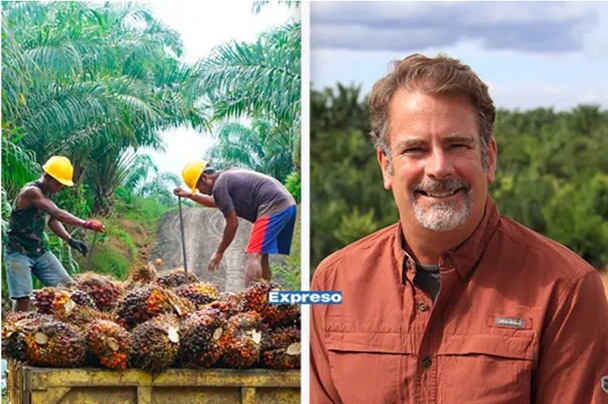
Ocho Sur workers harvest oil palm in Ucayali, Peru (left), and Michael Spoor, CEO of Ocho Sur (right). The company generates over 2,000 direct formal jobs in the Peruvian Amazon.
Ocho Sur's CEO argues formal employment and forest conservation go hand in hand in Peru's Amazon — and palm oil is the proof.
Quote text:
There is no conservation without human development. When families have stable incomes and confidence in the future, they are better able to support long-term conservation.”
PUCALLPA, UCAYALI, PERU, July 1, 2026 /EINPresswire.com/ -- Michael Spoor, CEO of Ocho Sur, in interview with Expreso: "There is no conservation without human development"— Michael Spoor, CEO of Ocho Sur
A model that combines formal employment and rural conservation today.
Published: June 29, 2026 | By Cristina Luna | Originally published in Expreso (Peru)
Michael Spoor, CEO of Ocho Sur, argues that the Amazon does not need to choose between production and forests. From Ucayali, he contends that oil palm can generate employment and conservation on already deforested land.
For years, oil palm was associated with deforestation. Why do you say Ocho Sur is different?
Because a false dilemma has been created. Palm oil is often framed as a choice between economic development and conservation, but our experience in the Peruvian Amazon points to a different conclusion. Forests rarely disappear because people want to destroy nature. They disappear because families need economic opportunities.
The challenge is to generate those opportunities on land that was already deforested before the cut-off dates recognized by sustainability standards, while protecting the forests that remain standing.
How does that model translate into the company's operations?
At Ocho Sur we generate formal employment, work with neighboring communities, and protect thousands of hectares of conservation areas and riparian forests.
The lesson is simple: when there is economic development and people have confidence in their future, protecting forests becomes much easier.
You have generated more than 2,000 direct jobs. What changes in the lives of those families?
Many people see employment as an economic statistic. I see families giving their children a better future and making decisions with greater peace of mind. Poverty is often associated with instability. A formal job provides predictable income, social protection, access to healthcare, and the ability to plan for the future.
What signs have you seen among your workers?
We have workers whose children are the first in their families to access technical or university education. We have seen families improve their homes, start small businesses, and build savings. What I am most proud of is that these opportunities exist in rural Amazonia. Many young people once felt that progress meant migrating to large cities. Today we show that it is possible to build a future without leaving home.
Why can palm oil reduce rural poverty and protect forests?
Because it offers something few crops can provide: reliable monthly income for more than thirty years. That stability transforms communities: families invest in education, improve their homes, and participate more in local life. It also reduces pressure on forests by helping families put down roots and thrive in the areas they already farm.
Are economic development and environmental conservation incompatible?
No. That is perhaps the most important myth facing the Amazon today. Conservation and economic development must go hand in hand. There can be no conservation without human development. People protect what they value. When families have stable incomes and confidence in the future, they are better able to support long-term conservation.
Conserving With a Future
For Michael Spoor, conservation cannot be imposed from the outside — it must generate value for those who live near the forest. That is why Ocho Sur maintains agreements with neighboring native communities to protect more than 2,000 hectares, while supporting priorities defined by those communities themselves, such as education, connectivity, environmental monitoring, and local development initiatives.
Between Advantage and Scrutiny
The Amazonian agro-industry faces growing pressure: demonstrating where its products come from. Michael Spoor warns that consumers, investors, regulators, and major brands are raising their standards around sustainability, traceability, and emissions reduction. Those who fail to adapt risk losing access to the most attractive markets.
The challenge is greater for small producers. Documenting land ownership, mapping production areas, maintaining records, and demonstrating traceability may be manageable for a large company, but overwhelming for a family farm. That is why Spoor argues that sustainability requires inclusion and support. If Peru takes advantage of this transition, it can become a global benchmark in responsible tropical agriculture.
The Amazon Can Export Far More Value Today
Ocho Sur's presence in Ucayali reveals an Amazonian potential that remains largely untapped. The company accounts for more than 50% of regional exports, but the CEO argues that the figure says less about the company than about the opportunities still ahead. The region has agricultural potential, privileged climate conditions, and a young population seeking to get ahead. With investment, technology, infrastructure, and clear rules, formal jobs and exports follow.
Investing Without Leaving Home
For Spoor, the future of the Amazon does not lie in isolating the region from economic activity. His vision is to build an economy that incentivizes people to invest in their communities, their land, and their own future. Under that view, progress should not mean abandoning the territory — it means finding opportunities within it.
About Ocho Sur
Ocho Sur is one of Peru's largest agroindustrial investments in the Amazon, operating in Ucayali with more than 10,000 hectares under regenerative palm oil production. The company generates over 2,000 direct formal jobs and maintains thousands of hectares under conservation agreements with neighboring communities.
Comunicaciones Ocho Sur
OCHO SUR
email us here
Legal Disclaimer:
EIN Presswire provides this news content "as is" without warranty of any kind. We do not accept any responsibility or liability for the accuracy, content, images, videos, licenses, completeness, legality, or reliability of the information contained in this article. If you have any complaints or copyright issues related to this article, kindly contact the author above.
