

Following family and parenting news from the world
Provided by AGP
Invest in Peace Education Urges Global Peace Education Network, as Violence Drains USD 17.5 Trillion from World Economy
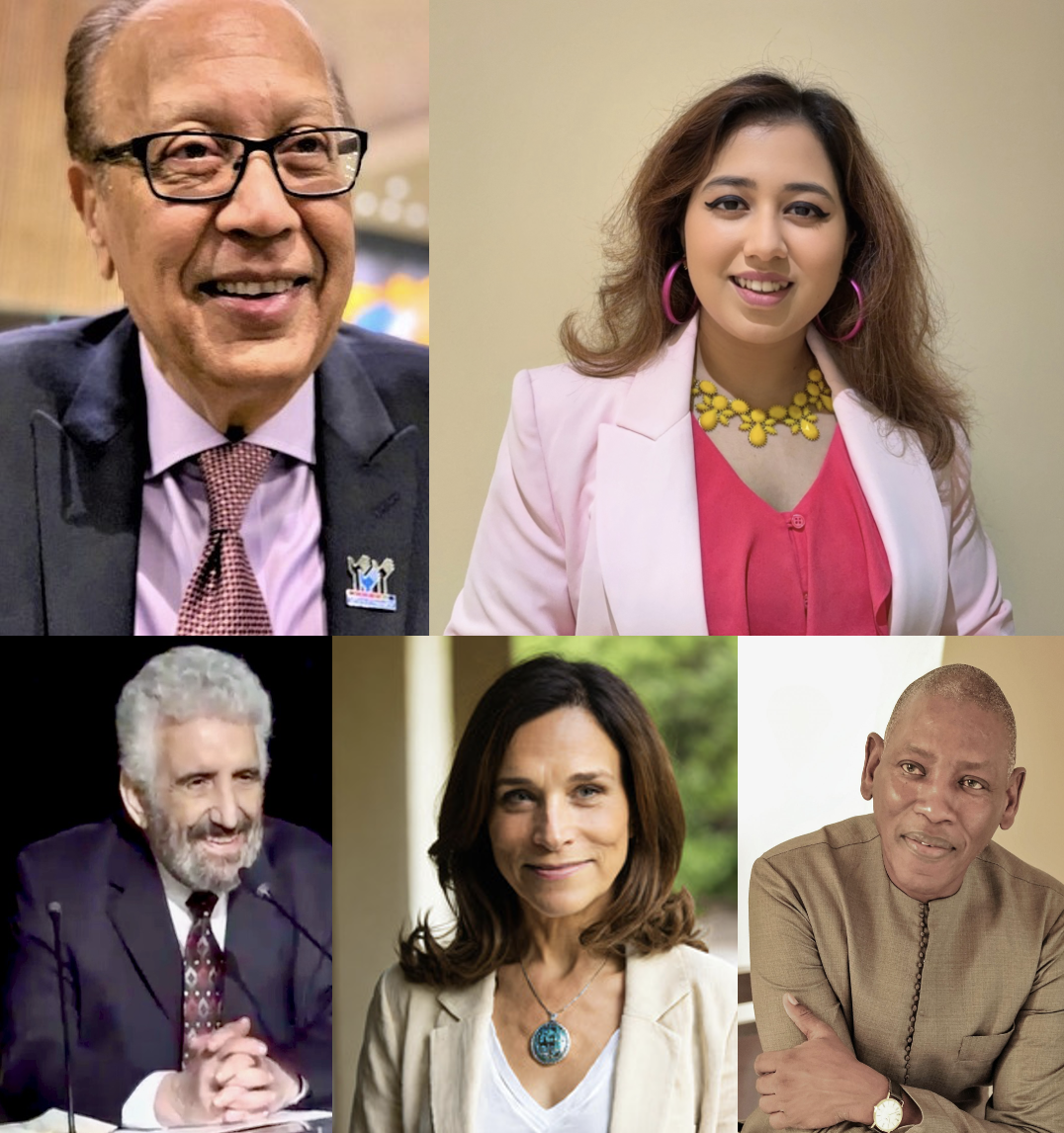
GPEN OFFICIALS Amb. Anwarul K. Chowdhury, Kehkashan Basu, David Weinberg, Lisa Worth Huber and Mabingue Ngom
The Global Peace Education Network Challenges World Leaders to Shift Priorities
Peace cannot be outsourced. We often look to governments—and yes, they have responsibilities. But peace will not come unless it is owned by the people…by each one of us”
NEW YORK, NY, UNITED STATES, May 12, 2026 /EINPresswire.com/ -- Each day, news headlines report billions invested for war, draining economies and jeopardizing the lives of millions in myriad ways. Statistics gathered by the Institute for Economics & Peace (IEP) paint a grim picture - a continuing decline in global peacefulness. Many key indicators of major conflict are now higher than at any time since World War II. — Ambassador Anwarul C. Chowdhury, President, GPEN Advisory Council
The global economic impact of violence reached $17.5 trillion in 2025 - $2,200 a person worldwide - while countries affected worst by conflict have recorded drops in GDP of up to 30% in a single year. Global expenditure on peacekeeping, relative to military expenditure, is at its lowest level in more than two decades - just 0.52% of total military spending in 2024.
With armed violence at a tipping point, the Board of Directors of the Global Peace Education Network, Inc. (GPEN) urgently calls citizens and leaders worldwide to shift paradigms – to invest in strategies at all levels of education to build the Culture of Peace. The United Nations adopted the “Declaration and a Programme of Action for a Culture of Peace” in September 1999 by consensus.
The Culture of Peace means that every one of us needs to consciously make peace and nonviolence part of our daily existence. Each and every individual is important to the process of transformation required to secure the Culture of Peace in our world. In a world divided by conflict, the GPEN Board declared, resolving disputes requires more than temporary ceasefires or fractured political compromises. To achieve global harmony we must intentionally teach the ways and means of peacebuilding in our homes, classrooms, communities, and public spaces.
Ambassador Anwarul K. Chowdhury, president of the Global Peace Education Network’s Advisory Council and founder of the Global Movement for The Culture of Peace asserted that lasting harmony requires deliberate, educational foundations. He added, "The true Culture of Peace is not a passive state, but an active, dynamic process where dialogue is encouraged and conflicts are solved in a spirit of mutual understanding.” He maintained, "We cannot expect future generations to build a peaceful world if we do not teach them the fundamental skills of non-violence, equality, and human rights today."
“Peace cannot be outsourced,” Ambassador Chowdhury emphasized, “We often look to governments—and yes, they have responsibilities. But peace will not come unless it is owned by the people…by each one of us.”
“Every generation is shaped by what we, as human beings, choose to normalize,” explained Kehkashan Basu, founder and president of worldwide youth action group Green Hope Foundation, and GPEN Advisory Council member. “If we normalize militarization, violence grows. If we normalize empathy, critical thinking, and dialogue, we create the conditions where peace can truly take root.”
The Global Peace Education Network, Inc. works to make peace education accessible, practical, and universal by connecting educators, civil society, and governments to collaborate on these objectives. “From early childhood centers to university lecture halls, peace education must become as fundamental to learning as reading and mathematics.” said David Weinberg, GPEN Executive Director.
“In our fractured society, communities are suffering, women are coming forward bravely telling their stories, children are being separated from their families, racial inequities continue to be ignored, the LGBTQ community is targeted, places of worship are threatened,” said Dr. Lisa Worth Huber, president of the National Peace Academy and vice-president of the GPEN Board. “We must organize local and national conversations to repair, restore, and heal, so we can honor the dignity of ALL humanity and address the critical issues of our climate and Earth.”
“To achieve true peace, we must shift our mindset from preparing for war to investing in peace education,” declares international development expert Mabingue Ngom, GPEN’s global ambassador and board member. “Only then can we hope to cultivate a world where understanding prevails over conflict.”
* * *
The Global Peace Education Network, Inc. is a volunteer-driven, multinational, nonprofit group formed in 2021 and incorporated in 2022 to make peace education the worldwide norm. To help build the Culture of Peace, GPEN reaches more than 1,100 passionate and capable organizations in every continent. GPEN is a registered US 501(c)3 nonprofit corporation. https://GlobalPeaceEducation.com
David Weinberg
Global Peace Education Network, Inc.
+1 214-282-3924
email us here
Visit us on social media:
LinkedIn
Instagram
Facebook
YouTube
Legal Disclaimer:
EIN Presswire provides this news content "as is" without warranty of any kind. We do not accept any responsibility or liability for the accuracy, content, images, videos, licenses, completeness, legality, or reliability of the information contained in this article. If you have any complaints or copyright issues related to this article, kindly contact the author above.
